At what age should your child first see a dentist in Ghana?
By Janice · Updated 2026-07-30
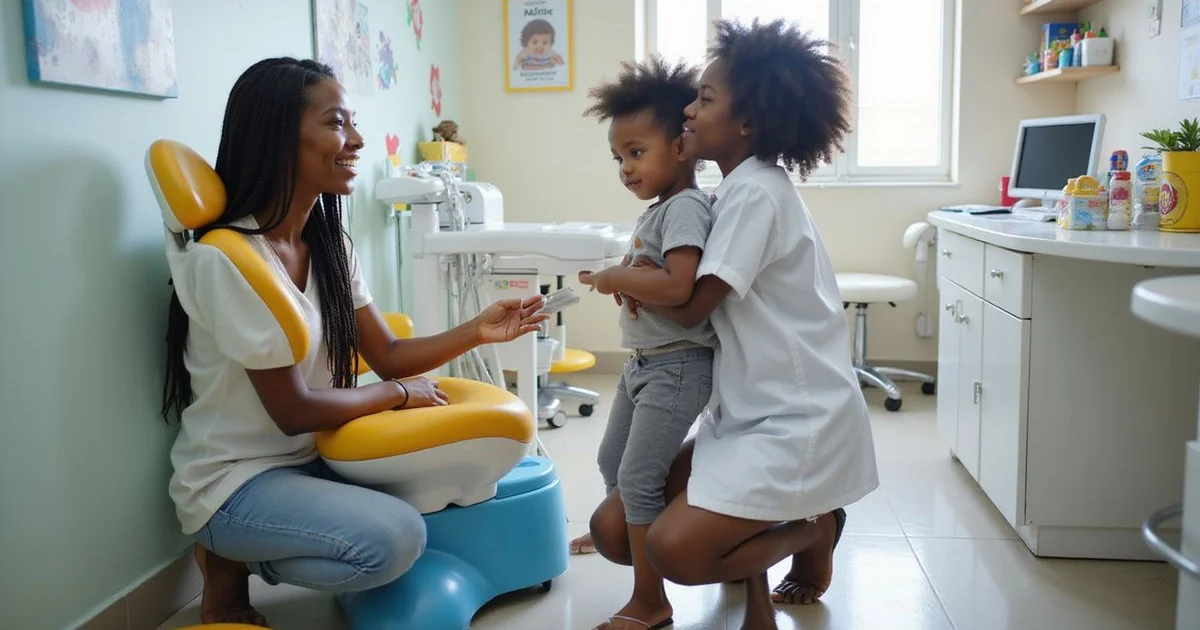
Many parents wait until a child complains of pain or a tooth looks visibly wrong before booking with a pediatric dentist. Starting earlier, before there is a problem, makes a real difference in both the child’s comfort with dental visits and how early any issues get caught.
The general guidance on timing
The widely recommended window is around the time the first tooth appears, or by a child’s first birthday, whichever comes first. This might sound early for a checkup, but the purpose at this age is less about treatment and more about establishing a relationship with a dentist and catching anything unusual in early tooth development.
| Age range | Typical purpose of the visit |
|---|---|
| First tooth or around age one | Introduction visit, brief exam, parent guidance on care |
| Ages two to five | Regular checkups, cavity monitoring, fluoride guidance if needed |
| School age | Routine checkups, monitoring for early orthodontic concerns |
| Ongoing | Roughly every six months, adjusted for individual risk |
Why earlier is better than “waiting until something looks wrong”
Waiting for visible pain or damage before the first visit means a child’s introduction to the dentist is already tied to something uncomfortable, which makes future visits harder emotionally. Starting early, when nothing is wrong, lets the child build a neutral or positive association from the beginning, and gives the dentist a baseline to track changes against over time.

Building good habits between visits
- Start brushing as soon as the first tooth appears, using an appropriately sized soft brush and a rice-grain amount of fluoride toothpaste for very young children.
- Limit sugary drinks and snacks, especially anything sipped slowly over a long period, which keeps sugar in contact with teeth longer.
- Avoid putting a child to bed with a bottle of milk or juice, which is a common and preventable cause of early childhood tooth decay.
- Make brushing a shared routine, at least until a child has the coordination to do it thoroughly on their own, usually around age six or seven.
What to do if you have already missed the “ideal” window
If your child is older and has not yet had a first dental visit, there is no harm in starting now rather than continuing to wait. A pediatric dentist can assess exactly where things stand and build a plan from there. The ideal timeline is a guideline for the best start, not a deadline that makes a later start any less worthwhile. If your child is nervous about that first visit, whenever it happens, the guide on taking a nervous or first-time child to the dentist has practical ways to prepare them.
Explore our directory of pediatric dental clinics in Ghana to find a provider suited to your child’s age and comfort level.
See our methodology for how pediatric providers are evaluated on this site.
FAQ
- Should a baby see a dentist before their first tooth appears?
- A dental visit is generally more useful once at least one tooth has come in, since there is something to actually check. Before that, a general pediatrician can advise on gum care and feeding habits that affect future oral health.
- What happens at a very young child's first dental visit?
- It is usually brief and gentle: a quick look at the teeth and gums, a chat with the parent about brushing and diet, and no invasive treatment unless something specific is found. The goal at this age is familiarity, not a thorough procedure.
- Do baby teeth really need to be treated if they will fall out anyway?
- Yes. Untreated decay in baby teeth can cause pain, infection, and can affect the permanent teeth developing underneath. Baby teeth also hold space for adult teeth to come in correctly.
- How often should young children see a dentist after their first visit?
- Roughly every six months is the standard interval for most children, though a dentist may recommend more frequent visits if there is higher decay risk or ongoing orthodontic monitoring needed.