Adult braces in Ghana: is it too late to straighten your teeth?
By Janice · Updated 2026-08-06
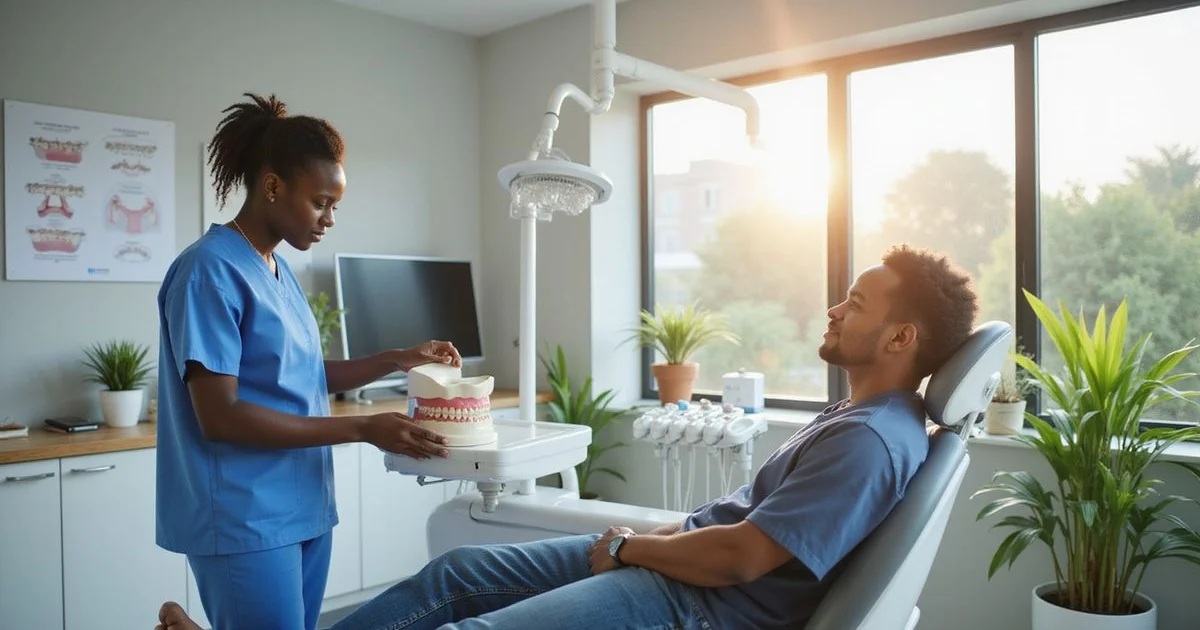
Straightening your teeth is not something you age out of. Adult patients make up a real and growing share of orthodontics practices in Ghana, whether the goal is correcting something never addressed in childhood or fixing shifting that happened later in life. Here is what is actually different about doing it as an adult.
What genuinely changes with age
- Bone remodels more slowly. Teeth still move effectively in adults, but the process can take somewhat longer for a comparable amount of movement than it would for a teenager.
- Existing dental work needs factoring in. Crowns, fillings, or missing teeth from earlier in life all affect how a treatment plan is built, and sometimes require coordination with other dental work first.
- Gum health matters more. Adults are statistically more likely to have some degree of gum recession or early gum disease, which needs to be stable before orthodontic treatment starts.
- Appearance during treatment often carries more weight. Many adults prioritize a less visible option, like clear aligners or ceramic braces, for professional reasons, even at a higher cost than metal braces.
What does not change
The underlying mechanics are the same at any age: gentle, sustained pressure gradually moves teeth into a new position. A well-planned adult case, with healthy gums and bone, generally reaches a comparable, successful outcome to the same case in a younger patient. Age alone is rarely the limiting factor; overall oral health is.

Is it worth it at this stage of life
| Common adult concern | How it usually plays out |
|---|---|
| “I am too old for this” | Age is rarely a disqualifying factor if gums and bone are healthy |
| “It will take forever” | Treatment time depends mainly on case complexity, not age alone |
| “It will look unprofessional” | Clear aligners and ceramic options address this directly |
| “I have fillings and crowns already” | These get factored into the plan, not a barrier to starting |
Getting started
An orthodontic consultation for an adult typically starts the same way it would for anyone: an exam, imaging, and a conversation about what you want to change and how much visibility during treatment matters to you. From there, the orthodontist can lay out realistic options across cost, appearance, and treatment length so you can weigh the tradeoffs against your specific priorities.
If discomfort with visible braces has been the thing holding you back, it may be worth comparing braces against clear aligners directly before assuming either option is off the table.
Explore our directory of orthodontists in Ghana to find a provider experienced with adult cases.
See our methodology for how orthodontic providers are evaluated on this site.
FAQ
- Is there an age limit for getting braces?
- No. As long as your gums and the bone supporting your teeth are healthy, orthodontic treatment works at any age. Adults make up a meaningful share of orthodontic patients in most practices.
- Does orthodontic treatment take longer for adults than teenagers?
- Sometimes slightly longer, since adult bone remodels more slowly than a teenager's, but the difference is usually modest for a comparable case rather than dramatic.
- What is different about getting braces as an adult?
- Adults are more likely to have existing dental work, like fillings or crowns, that needs to be factored into the plan, and are more likely to choose a less visible option like clear aligners or ceramic braces for professional or personal reasons.
- Can I get braces if I have gum disease?
- Active gum disease usually needs to be treated and stabilized first, since moving teeth through unhealthy gum and bone tissue carries more risk. A dentist or periodontist can assess and treat this before orthodontic work begins.