Signs it might be time to remove a wisdom tooth
By Janice · Updated 2026-08-01
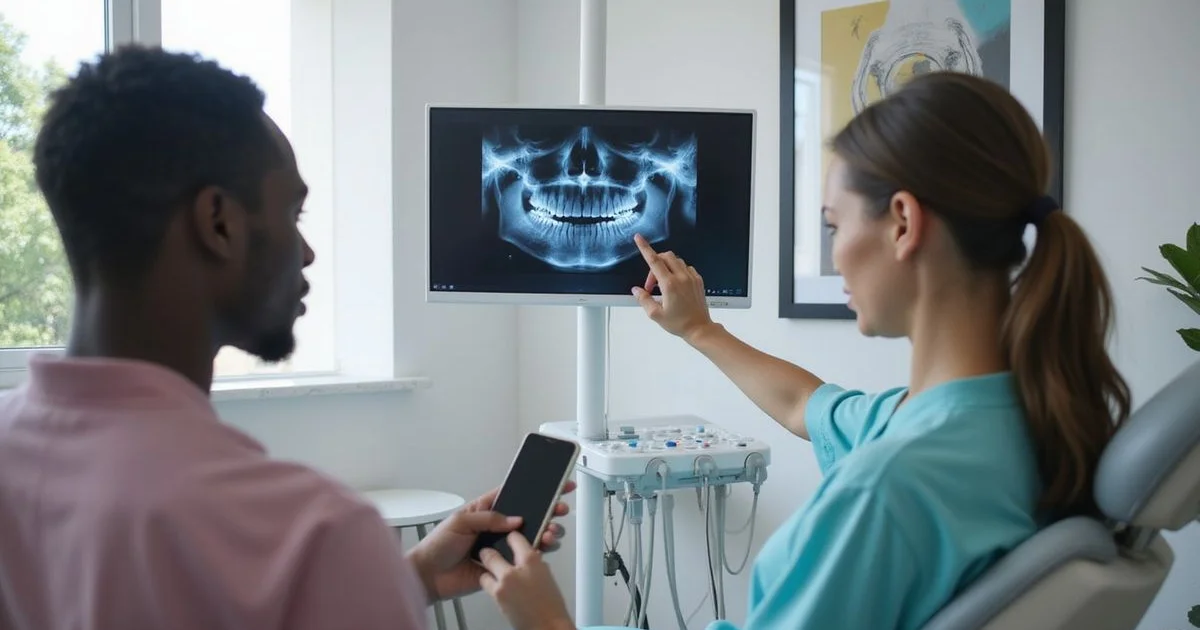
Wisdom teeth, the last molars to come in, do not always announce themselves clearly. Some people never notice theirs at all. Others deal with recurring pain, swelling, or infection for months before connecting it to a wisdom tooth in the back of the jaw. Here are the signs worth paying attention to, and how a specialist in oral and maxillofacial surgery decides what to do about them.
This is general information, not a diagnosis. A dental exam and imaging are needed to confirm what is actually happening with a specific tooth.
Symptoms that suggest a problem
- Persistent pain or pressure at the back of the jaw, especially if it comes and goes over weeks or months rather than being a one-off ache.
- Swelling or tenderness in the gum behind the last visible molar.
- Difficulty opening your mouth fully, or jaw stiffness that was not there before.
- A bad taste or odor near the back of the mouth, which can point to trapped food or infection around a partially emerged tooth.
- Crowding or shifting of nearby teeth, sometimes noticed as pressure or slight movement in teeth that previously felt stable.
- Recurring gum infection in the same spot, even if it clears up temporarily with cleaning.
None of these symptoms alone confirms a wisdom tooth needs to come out, but a pattern of any of them is a reasonable prompt to get it checked rather than waiting it out. If pain and swelling escalate quickly rather than building slowly, treat it as more urgent: the guide on what to do in a dental emergency covers first-aid steps while you get to a clinic.
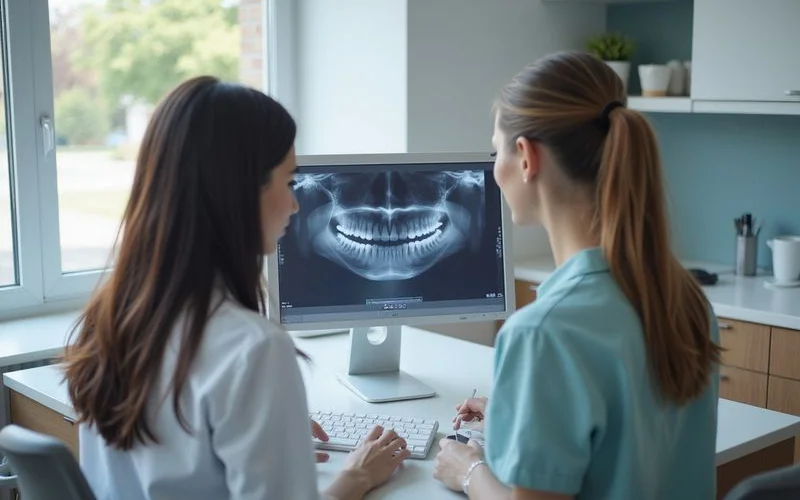
How a specialist decides: monitor or remove
| Situation | Likely approach |
|---|---|
| Fully emerged, good position, easy to clean | Often monitored, no removal needed |
| Partially emerged with recurring infection | Removal usually recommended |
| Impacted with pain or pressure on neighboring teeth | Removal usually recommended |
| No symptoms, flagged only on x-ray | Depends on position; may be monitored or removed proactively |
An x-ray is the key diagnostic step here, since it shows the tooth’s position, angle, and how close it sits to nerves or neighboring roots, all of which affect both the decision and how complex the removal would be if needed.
What removal actually involves
If removal is recommended, the specialist will explain whether it is a simple extraction or a surgical one, based on how impacted the tooth is. Surgical removal, more common for impacted wisdom teeth, involves local anaesthesia, and sometimes sedation, with a longer recovery than a simple extraction. The specialist should walk you through expected recovery time and aftercare before the procedure, not just after.
If you are unsure whether it is time
A dental exam and x-ray settle most of the uncertainty. If a dentist flags a wisdom tooth as a concern during a routine visit, it is worth getting a specialist opinion rather than waiting for pain to force the decision, since early evaluation generally means a more straightforward removal if it turns out to be needed.
Explore our directory of oral and maxillofacial surgery providers in Ghana to find a specialist for an evaluation.
See our methodology for how surgical providers are assessed on this site.
FAQ
- Do all wisdom teeth need to be removed?
- No. A wisdom tooth that has fully emerged, sits in a good position, and is easy to clean can often stay in place without ever causing a problem. Removal is generally recommended when a tooth is impacted, causing pain, or repeatedly leading to infection.
- What does it mean if a wisdom tooth is impacted?
- An impacted tooth is one that has not fully emerged through the gum or bone, often because there is not enough space in the jaw. This can lead to pain, swelling, infection, or pressure on neighboring teeth.
- Is wisdom tooth pain always a sign it needs to come out?
- Not necessarily immediately, but persistent or recurring pain around the back of the jaw is worth an evaluation. Sometimes cleaning and monitoring resolves mild irritation; other times it signals a problem that will keep recurring until the tooth is removed.
- How urgent is wisdom tooth removal once it is recommended?
- It depends on the reason. A tooth causing repeated infection or significant pain should be addressed promptly. A tooth flagged during a routine exam with no current symptoms may be scheduled with more flexibility, based on the specialist's recommendation.