Is teeth whitening safe? What to know before you whiten
By Janice · Updated 2026-07-24
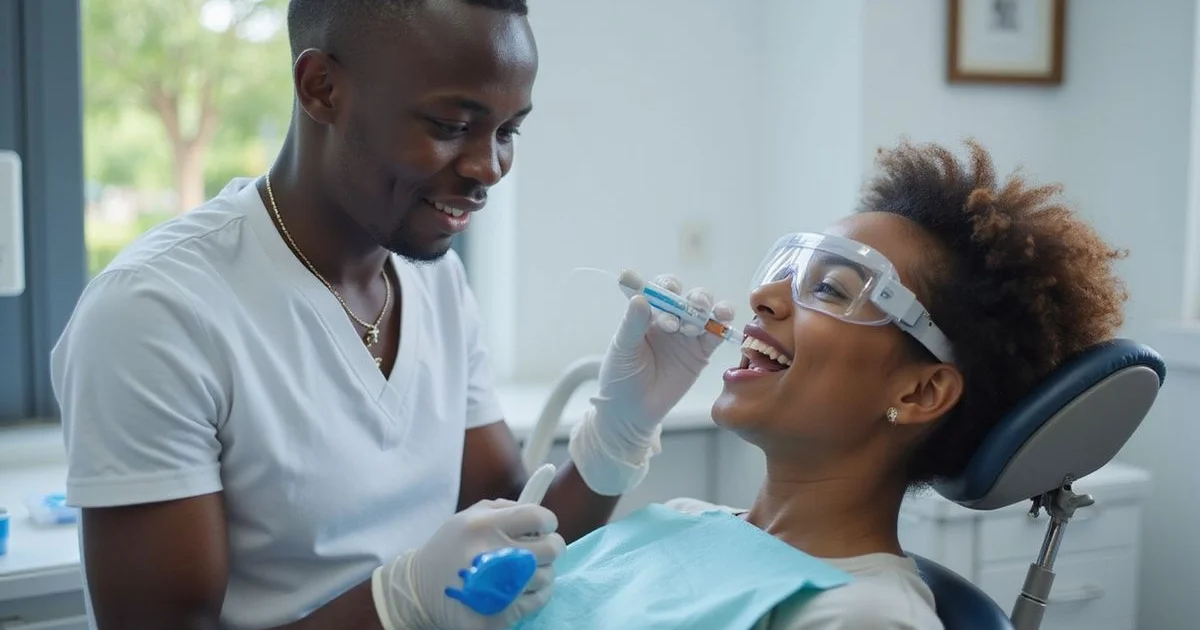
Teeth whitening is one of the most requested treatments in cosmetic dentistry, and for most people it is genuinely safe when done properly. The risk comes almost entirely from how it is done, not the concept of whitening itself. Here is what actually happens and where the real risks lie.
How whitening actually works
Whitening products use a peroxide-based gel that breaks down stains within the enamel and just beneath it. In a clinic, the dentist applies a protective barrier over your gums first, then the whitening gel, sometimes activated with a light, for a controlled period. Take-home kits prescribed by a dentist use a lower concentration gel worn in a custom tray over several days.
The real risks, and how serious they are
- Temporary sensitivity. The most common side effect. Teeth become sensitive to hot and cold for a few days as the whitening agent works. This is expected and usually resolves on its own.
- Gum irritation. If whitening gel contacts the gums directly, usually from a poorly fitted tray or an unsupervised application, it can cause temporary burning or irritation.
- Uneven results with existing dental work. Crowns, veneers, and fillings do not whiten the way natural enamel does, so whitening can leave visible mismatched shades if you have restorations in visible teeth.
- Overuse. Whitening more frequently than recommended, or using unregulated high-strength products without supervision, is where genuine enamel and gum damage risk increases.
None of these are reasons to avoid whitening altogether. They are reasons to have it done by, or at least guided by, a dentist rather than relying on unverified products with no clear concentration or instructions.
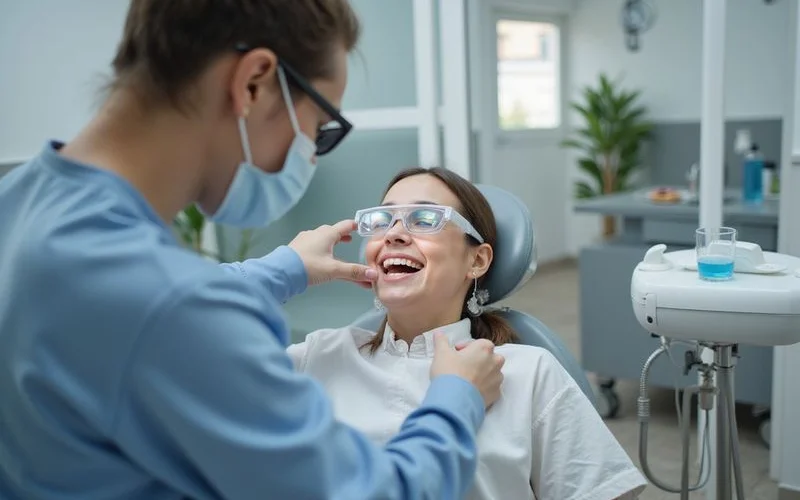
In-clinic vs. take-home: a quick comparison
| In-clinic whitening | Dentist-prescribed take-home kit | Unregulated over-the-counter product | |
|---|---|---|---|
| Speed of results | Fastest, often one visit | Gradual, over one to two weeks | Varies widely |
| Supervision | Full, in real time | Guided but self-applied | None |
| Gum protection | Built into the process | Depends on tray fit | Often minimal |
| Cost | Higher | Moderate | Lowest, but least predictable |
Questions worth asking before you book
- Will you check my teeth and gums for cavities or gum disease first?
- What concentration of whitening agent do you use, and is it appropriate for my case?
- How will my gums be protected during application?
- What results should I realistically expect, given any crowns or fillings I have?
Making a safe decision
Teeth whitening done through a proper clinic, with a dentist who checks your mouth first and explains the process, carries low risk for most healthy adults. The safety concerns worth taking seriously are mostly tied to skipping that step: whitening over untreated decay, using unregulated products, or overdoing the frequency. If in doubt, a quick consultation before you commit answers most of the uncertainty. If whitening is one part of a bigger plan, alongside veneers or bonding, the guide on preparing for a smile makeover consultation walks through how that first appointment works.
See our methodology for how cosmetic dentistry providers are evaluated on this site, and browse the full directory to compare clinics offering whitening services.
FAQ
- Does teeth whitening damage tooth enamel?
- Properly administered whitening using peroxide-based products, whether in-clinic or a professional take-home kit, does not damage enamel structure. Damage is far more likely with unregulated, poorly formulated products or overuse beyond recommended frequency.
- Why do teeth feel sensitive after whitening?
- Temporary sensitivity to hot and cold is a common, expected side effect as the whitening agent works through the enamel. It typically fades within a few days and is a sign to space out sessions, not necessarily a sign of harm.
- Is in-clinic whitening safer than at-home kits?
- In-clinic whitening is professionally supervised, uses controlled concentrations, and typically protects your gums during application, which lowers the risk of irritation. Reputable take-home kits prescribed by a dentist are also generally safe; unregulated over-the-counter products bought without guidance carry more uncertainty.
- Can everyone get their teeth whitened?
- Most people with healthy teeth and gums are good candidates, but whitening is not recommended if you have untreated cavities, gum disease, or certain restorations like crowns and veneers, which will not whiten and can end up an odd shade compared to natural teeth. A dentist should check your mouth first.