Dental care for seniors and aging parents in Ghana
By Janice · Updated 2026-08-04
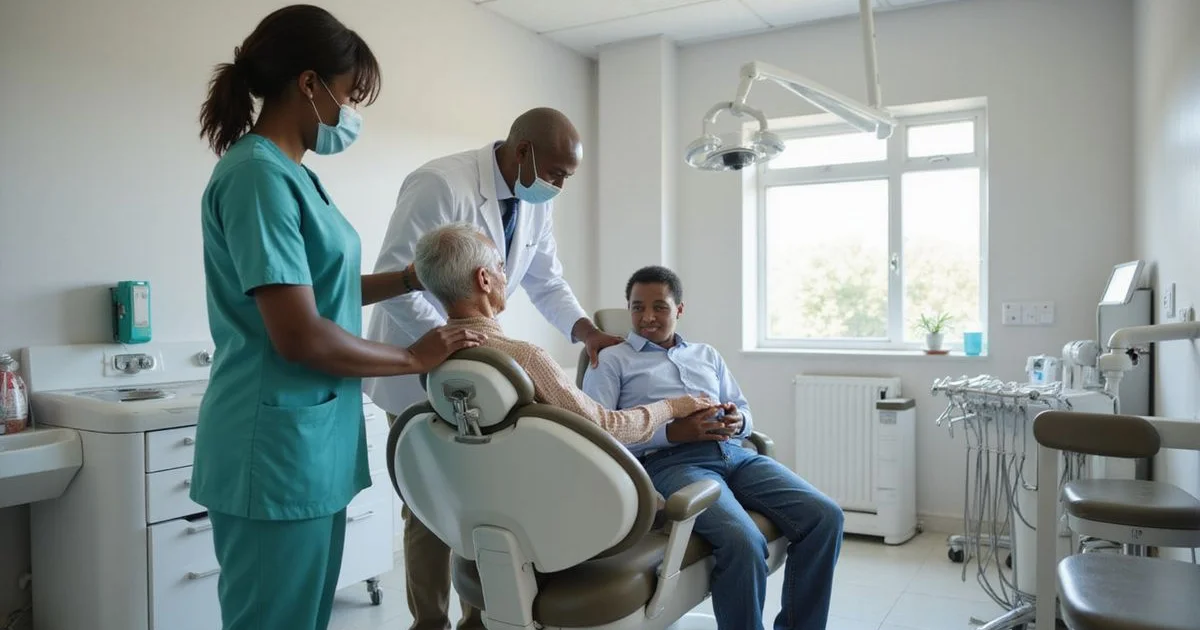
Oral health does not become less important with age. If anything, older adults often need more attentive dental care, not less, as decades of wear, medication side effects, and past dental work all start to catch up. This guide covers what changes with age and how to support an aging parent through it.
This is general information, not medical advice specific to any individual’s health condition or medications.
What changes with age
- Gum recession and root exposure, which increases sensitivity and the risk of decay at the tooth root, an area more vulnerable than the crown.
- Dry mouth, often a side effect of common medications for blood pressure, allergies, or other chronic conditions. Reduced saliva increases the risk of decay and gum disease.
- Wear and failure of old dental work. Fillings, crowns, and bridges placed decades earlier eventually need replacement or repair.
- Tooth loss, which affects chewing, nutrition, speech, and self-confidence, and which is not an inevitable part of aging when properly managed.
- Reduced dexterity, which can make thorough daily brushing harder, particularly for someone managing arthritis or a similar condition.

How to help without taking over
Helping a parent with dental care works best when it respects their independence rather than replacing it. A few practical approaches:
- Ask function-focused questions, not just “are you okay.” Is chewing harder than it used to be? Do dentures feel loose? Is anything sore when eating or drinking something hot or cold?
- Offer to handle logistics. Booking the appointment, arranging transport, or simply going along removes the biggest barrier for many older adults, which is often just the effort involved.
- Loop in the dentist on medications and health conditions. Certain medications and conditions affect dental treatment planning, and the dentist needs the full picture, not just what shows up in the mouth.
- Watch for avoidance patterns. Skipping meals, favoring soft foods only, or reluctance to smile can all be quiet signs of an underlying dental problem a parent has not mentioned.
Common concerns and what to do about them
| Concern | Practical step |
|---|---|
| Loose or ill-fitting dentures | Book an adjustment; ill-fitting dentures can cause sores and affect eating |
| Dry mouth from medication | Mention it to the dentist; simple changes to hydration and oral care can help |
| Difficulty with daily brushing | Try an electric toothbrush with a wider grip, or assist directly if needed |
| Reluctance to see a dentist | Frame the visit around comfort and function rather than obligation |
| Missing teeth affecting eating | Ask about replacement options suited to overall health and budget |
Making the visit itself easier
A dentist experienced with older patients will typically move at a comfortable pace, explain findings clearly, and take into account mobility or hearing considerations without being asked. If a parent has had a rushed or dismissive experience before, it is worth trying a different provider rather than assuming that is simply what dental visits are like at their age. Whether you are coaching a nervous parent or a first-time child through unfamiliar territory at the dentist, the same idea applies: the guide on taking a nervous child to the dentist has techniques for calming nerves that work across ages.
Explore our directory of dental clinics in Ghana to find providers with a track record of patient, clear communication, which matters especially for older patients.
See our methodology for how patient experience factors into how clinics are ranked on this site.
FAQ
- Why do older adults often need more dental care, not less?
- Decades of wear, past fillings and crowns aging out, gum recession, and medication side effects like dry mouth all add up over time. Oral health needs generally increase with age rather than becoming less important.
- How do I convince a reluctant parent to see a dentist?
- Focus on comfort and function rather than framing it as a lecture: ask if chewing feels harder, if anything is sore, or if their dentures fit properly. Offering to go along and handle the logistics often removes the biggest barrier, which is simply the effort of arranging it.
- Are dentures the only option for missing teeth in older age?
- No. Depending on overall health and bone density, implants or bridges can also be options for replacing missing teeth. A dentist can assess which approach suits an individual's specific situation and budget.
- What if my parent has memory issues and struggles with daily brushing?
- A simplified routine, larger-grip toothbrushes, and a caregiver checking in on brushing can help significantly. Mention any memory or cognitive changes to the dentist, since it affects both home care guidance and how treatment is planned.